
Last updated: August 11, 2026
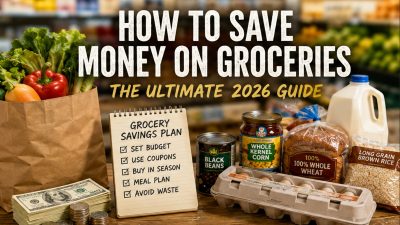
Groceries are one of the easiest household expenses to feel powerless about because prices change, package sizes shrink, promotions rotate, and every store seems to have its own app, loyalty account and coupon rules. But the biggest grocery savings usually do not come from one magic coupon. They come from a repeatable system: plan around what you already own, shop the strongest sale items, compare unit prices, stack the savings you are actually eligible for, and waste as little food as possible.
This guide is designed to be that system. It covers the basics that work at almost every supermarket, then goes much deeper into digital coupons, loyalty rewards, cashback apps, markdowns, meat and produce strategies, warehouse clubs, pickup and delivery, freezer management, stock-up prices, food waste, SNAP produce incentives and store-by-store programs. You do not need to do all of it. Even using a few sections consistently can make a noticeable difference.
Jump to the Grocery Savings Strategy You Need
The Grocery Savings Stack: Use Several Small Wins on the Same Cart
The most reliable grocery strategy is a stack of decisions. A sale price by itself may be good; a coupon by itself may be good; a cashback offer by itself may be good. The real power comes from using the layers that are allowed together without buying things you did not need in the first place.
| Layer | What to do | Why it matters |
|---|---|---|
| 1. Pantry/freezer | Use what you already paid for first. | Prevents duplicate purchases and food waste. |
| 2. Meal plan | Build meals around sale proteins, produce and staples. | Lets the weekly ad work for you instead of dictating impulse buys. |
| 3. Store price | Compare shelf price and unit price. | A “sale” package can still be worse value than another size or brand. |
| 4. Store loyalty | Enter/scan your member account. | Unlocks member pricing, personalized deals and rewards at many chains. |
| 5. Digital/store coupon | Clip only relevant offers before checkout. | Can reduce the price without carrying paper coupons. |
| 6. Manufacturer offer | Use only where current store terms allow it. | May add another discount, but stacking rules differ by chain. |
| 7. Cashback/rebate | Submit eligible purchases after checkout or use linked loyalty accounts. | Can return money or gift-card value after the purchase. |
| 8. Waste prevention | Freeze, portion and rotate what you bought. | A 50% discount is not savings if half gets thrown away. |
Step 1: Set a Grocery Budget That Is Tight Enough to Matter—but Realistic Enough to Keep
A grocery budget is most useful as a target and feedback tool, not as a number that makes you feel like you failed when milk, eggs or meat spike for a week. Start with what your household actually spends. Pull four weeks of grocery receipts or transaction history, separate groceries from household goods, alcohol, pet supplies and restaurant spending, and calculate a weekly average.
- Add up four weeks of food-at-home purchases.
- Subtract non-food items if you want a clean grocery number.
- Divide by four to get your current weekly average.
- Set the first target 5% to 15% below that average instead of trying to cut the bill in half overnight.
- Track the difference for one month, then adjust again if the new target feels sustainable.
For a reality check, the USDA publishes monthly food-plan cost reports at several spending levels. The USDA Food Plans are useful as a benchmark, not a commandment: household size, age, location, dietary needs and how much you cook from scratch can move your real number substantially.
Do a 15-Minute Receipt Audit Before Hunting for More Coupons
Before downloading another savings app, look at the purchases you already make. Circle repeat items and write down how often you buy them. Then mark convenience items, food that was thrown away, expensive drinks/snacks, and anything purchased because it was on sale rather than because it was needed.
| What you see on receipts | Question to ask | Potential fix |
|---|---|---|
| Same 10–20 items every week | Do I know their normal and good sale prices? | Build a small price book. |
| Frequent pre-cut/pre-portioned food | Would a larger basic version work? | Compare cost per ounce or serving. |
| Many one-off snacks/drinks | Are these planned or impulse buys? | Set a snack budget or choose one sale item. |
| Food bought again before old package is finished | Am I checking pantry/freezer first? | Do a 5-minute inventory before making the list. |
| Lots of “deal” items | Did the promotion change what I intended to buy? | Count dollars spent, not coupons used. |
The Weekly Grocery Planning System That Saves More Than Random Couponing
A strong weekly plan can be done in about 20 minutes once you get used to it. The goal is not to schedule seven elaborate dinners. The goal is to make the food you already have and the store’s best prices work together.
1. Shop your kitchen first
Check the refrigerator, freezer and pantry before opening a store app. Look for produce that needs to be used, meat already frozen, half-used sauces, bread that can become toast or breadcrumbs, and staples you have enough of for another week.
2. Scan the weekly ad for loss-leader-style prices
Focus on the first-page and prominent offers on proteins, produce, dairy and pantry staples you actually use. A store may advertise many “deals,” but you only need the ones that beat your normal alternatives.
3. Choose two or three anchor meals
If chicken is strong this week, one family pack can become tacos, pasta and sandwiches. If beans, rice and vegetables are cheap, build a soup or bowl night. Anchor meals make it easier to use one sale ingredient more than once without eating the exact same dinner repeatedly.
4. Add breakfast, lunch and snack basics
A grocery budget often leaks outside dinner. Plan breakfast, lunches and snacks too. Oatmeal, eggs, yogurt, fruit, leftovers, sandwiches, popcorn and basic baking ingredients can cost far less per serving than individually packaged convenience options.
5. Make a three-part list
- Must buy: ingredients and staples you genuinely need.
- Buy if the price is good: flexible items such as fruit, cereal or a preferred protein.
- Stock up: shelf-stable or freezable items only when the price hits your target and you have room.
Build a Tiny Grocery Price Book—Not a Complicated Spreadsheet
You do not need to track 500 products. Start with the 20 to 30 items that make up a large share of your grocery bill: milk, eggs, bread, chicken breast, ground beef, cereal, coffee, cheese, yogurt, rice, pasta, canned tomatoes, frozen vegetables, fruit, detergent and whatever your household buys constantly.
| Item | Normal price | Good price | Great stock-up price | Unit |
|---|---|---|---|---|
| Chicken breast | Your local normal | About 15–20% below normal | A price low enough to justify freezing extra | per lb |
| Cereal | Your local normal | Sale/member price | Sale + eligible coupon/rebate | per oz |
| Cheese | Your local normal | Weekly-ad price | Strong sale on a freezable/useable quantity | per oz |
| Coffee | Your local normal | Promo price | Promo + eligible loyalty/rebate | per oz or pod |
The exact dollar threshold should come from your local stores and preferred brands, because a “great” price in one region can be ordinary in another. The point is to recognize your own cycle quickly so a bright red shelf tag does not make the decision for you.
Unit Pricing: The Fastest Way to Catch Fake-Looking Bargains and Shrinkflation
The shelf price tells you what the package costs. The unit price tells you what a comparable amount costs—often per ounce, pound, quart, liter, count or 100 units. NIST describes unit pricing as a tool for comparing value and fighting the confusion created by different package sizes and shrinkflation. When unit labels are available, use them. When they are not, calculate them yourself.
- Compare the same unit. Do not compare cents per ounce with dollars per pound without converting.
- Use usable quantity. Boneless meat and bone-in meat are not identical value if much of one package is discarded.
- Check whether a coupon applies only to one size. A smaller package with a coupon can beat the bulk package.
- Do not let the lowest unit price force you into waste. The cheapest ounce is not cheap when it expires in the trash.
- Recheck familiar products occasionally. Package sizes change even when the front of the box looks almost identical.
Store Brand vs. Name Brand: Compare the Product, Not the Logo
Private-label products can be one of the easiest recurring savings because they do not require clipping anything. But “always buy store brand” is too simple. Sometimes a national brand on promotion plus an eligible digital coupon or rebate is cheaper. Sometimes the store brand is clearly lower even at regular price. Compare unit cost after all discounts and decide which differences you actually care about.
Good low-risk categories for testing cheaper alternatives include flour, sugar, salt, basic spices, canned vegetables, beans, rice, pasta, baking ingredients, frozen vegetables, paper goods and many dairy staples. For foods where your household is brand-loyal, compare during promotions rather than buying a substitute nobody will eat.

Digital Coupons, Paper Coupons and Store Offers: How to Use Them Without Overspending
Couponing works best when the coupon follows your list—not when your list follows the coupon. Modern grocery couponing is increasingly app/account based. Many chains let you clip an offer online, identify yourself at checkout with a phone number, barcode or loyalty card, and have the discount apply automatically when the qualifying item and conditions are met.
The coupon checklist
- Read the product, size and quantity requirements.
- Check whether the coupon is store-issued or manufacturer-funded.
- Check the expiration date and redemption limit.
- Clip/activate it before checkout.
- Make sure the qualifying item is attached to the correct loyalty account.
- At checkout, verify the discount before you leave.
- Keep the receipt until any post-purchase rebate has credited.
Common coupon traps
- “Save $5 when you spend $25” can make you spend $10 extra to avoid “losing” $5.
- A coupon on a premium brand can still leave it more expensive than the store brand.
- Buying two because the coupon requires two is not savings if the second expires.
- Digital and paper versions may be the same manufacturer offer and therefore not stackable.
- A rebate app may reject an offer if another coupon was used, depending on the current terms.
Grocery Loyalty and Rewards Programs: Treat Them Like a Second Price Tag
At many chains, the price on the shelf is no longer the full story. Loyalty accounts can unlock member-only prices, digital coupons, fuel points, cash-style rewards, personalized deals or free items. If you shop a chain repeatedly, the free program is usually worth evaluating. But turn off unnecessary notifications and do not confuse “rewards earned” with money saved if the program changed what you bought.
Privacy matters too. Loyalty systems can use purchase history to personalize offers. If you prefer not to participate, compare the non-member shelf price with nearby competitors and decide whether the discount is worth sharing that shopping data.
Cashback and Receipt Apps: Use Them After Price Comparison, Not Instead of It
Apps such as Ibotta and Fetch can add another savings layer. Ibotta uses activated offers and, depending on the retailer, receipt submission or linked accounts. Fetch awards points from eligible receipts and shopping activity that can be redeemed for rewards such as gift cards. The exact offers and redemption terms change, so always use the current app terms.
A disciplined rebate workflow
- Make your grocery list without looking at rebate apps.
- Check rebates only for items already on the list or true substitutes.
- Compare the rebated brand with the cheapest acceptable alternative.
- Buy only the qualifying size/variety.
- Submit or verify the purchase promptly.
- Record the rebate only after it actually credits.
Markdowns and Grocery Clearance: How to Find the Store’s Real Schedule
There is no trustworthy nationwide hour when every supermarket marks down meat, bakery or produce. The useful schedule is the one at your store. Staffing, delivery days, inventory systems and department routines differ. Instead of chasing a universal time, learn the pattern.
- Visit the department on two or three different days and note when reduced-price stickers appear.
- Ask a department employee politely when they usually review short-dated items.
- Check the dedicated clearance rack, endcaps and refrigerated markdown section if the store has them.
- Look at the product condition and date—not only the sticker.
- If you buy short-dated meat, dairy or bread, plan to use or freeze it promptly and safely.
Where markdowns often show up
| Department | What to watch | Best use |
|---|---|---|
| Meat | Short-dated packages, overstock, seasonal cuts | Cook soon or portion/freeze. |
| Bakery | Day-old bread, rolls, cakes, seasonal bakery | Freeze bread/rolls; use desserts promptly. |
| Produce | Ripe fruit, imperfect produce, bagged items near date | Smoothies, sauces, soups, same-day meals. |
| Dairy | Short-dated yogurt, cheese, milk | Buy only what you can use safely. |
| Seasonal | Holiday baking, candy, grilling, school lunch items | Stock shelf-stable items only if price and use make sense. |
“Best By” Does Not Automatically Mean “Throw It Away”
Date labels are a major source of confusion and waste. FDA and USDA guidance distinguishes quality-based wording from food-safety decisions. A “Best if Used By” style date generally communicates expected quality, not an automatic safety cutoff. That does not mean every old or improperly stored food is safe: storage temperature, packaging, spoilage signs and food-specific safety guidance still matter.
The money-saving lesson is simple: do not throw food away solely because you misunderstood a quality date, but never take a food-safety gamble to save a few dollars. When in doubt about safety, follow authoritative storage guidance and discard questionable food.
How to Save Money on Meat, Poultry and Seafood
Protein can dominate a grocery bill, so this category deserves a system of its own. Instead of deciding “we eat chicken breasts on Tuesday,” decide “we will build several meals around whichever acceptable protein has the strongest per-pound price this week.”
- Compare price per pound, not package total.
- Use flexible recipes: tacos, stir-fry, soup, pasta, rice bowls and casseroles can switch proteins.
- Consider less expensive cuts when the cooking method can make them tender.
- Compare boneless vs. bone-in based on edible yield and how you use bones/skin.
- Portion family packs immediately. Label freezer bags with item and date.
- Use meat as part of a dish rather than the entire plate when appropriate; beans, lentils, eggs and dairy can stretch meals.
- Check manager markdowns only when you have a plan to cook or freeze promptly.
- Avoid paying for marinade, cutting or seasoning you can do cheaply at home unless the convenience prevents waste.

How to Save Money on Fruits and Vegetables
The cheapest produce is not always fresh, whole and loose. Compare fresh, frozen and canned versions based on the recipe, edible yield, sodium/sugar needs and how quickly your household can use them. Frozen vegetables can be an excellent value because they are portionable and long-lasting; canned tomatoes, beans and fruit can also reduce waste when chosen appropriately.
- Buy seasonal produce when local supply is abundant, but still compare store prices.
- Use whole produce when pre-cut convenience adds a large markup and you have time to prep it.
- Buy pre-cut only when the usable yield and reduced waste genuinely justify it.
- Choose flexible fruit: bananas, apples, oranges and sale fruit can cover snacks without requiring a different item for every person.
- Freeze ripe bananas, berries or chopped fruit before they become trash.
- Turn soft vegetables into soup, sauce, stir-fry or roasted vegetables while they are still safe.
- Compare farmers markets, ethnic grocers and produce markets; no channel is automatically cheapest.
If you receive SNAP, check whether a participating market or retailer near you offers a produce incentive such as Double Up Food Bucks. Programs vary by state and location, but where available they can increase the amount of eligible fruits and vegetables a household can purchase.
Milk, Eggs, Cheese and Yogurt: Small Habits That Add Up
- Compare price per ounce on block vs. shredded cheese; shredding at home can be cheaper, but buy the form you will use.
- Check larger yogurt tubs against single cups. Portioning at home often lowers cost and packaging.
- Buy milk in a size your household can finish; the cheaper gallon is not cheaper if a large portion spoils.
- Use eggs as a flexible lower-cost protein for breakfast-for-dinner, sandwiches, fried rice and baking.
- Freeze appropriate dairy products only when you are comfortable with possible texture changes; many items remain best for cooking after thawing.
Build a Low-Cost Pantry That Can Rescue an Expensive Week
A useful pantry is not a bunker full of random sale items. It is a set of inexpensive ingredients that combine with whatever protein and produce are cheap this week.
| Staple | Why it helps | Low-cost uses |
|---|---|---|
| Rice | Long shelf life, flexible base | Bowls, stir-fry, beans and rice, side dish |
| Dry/canned beans | Protein + fiber | Chili, tacos, soup, bowls |
| Pasta | Fast base for leftovers | Tomato sauce, vegetables, tuna/chicken pasta |
| Oats | Inexpensive breakfast base | Oatmeal, overnight oats, baking |
| Canned tomatoes | Turns basics into meals | Sauces, soup, chili |
| Flour/yeast/baking basics | Can replace some convenience foods | Pancakes, bread, pizza dough, baking |
| Frozen vegetables | Portionable and low waste | Stir-fry, soup, sides, casseroles |
The Frozen Aisle Can Save Money—If You Ignore the Convenience Tax
Frozen food is not one category. Plain frozen vegetables, fruit and basic proteins can be economical and waste-resistant. Fully prepared meals, premium appetizers and individually wrapped convenience items may carry a substantial cost per serving. Compare unit or serving cost and consider what preparation step you are paying the manufacturer to do.
Bulk Buying and Warehouse Clubs: Do the Break-Even Math
Buying more is not the same as saving more. A warehouse pack can have a great unit price while still increasing your monthly spending or waste. Before joining a warehouse club for grocery savings, identify the products where the unit savings are large enough to repay the membership and where your household can actually use the quantity.
- Compare identical quality and package type; warehouse packages are not always the same size as supermarket packages.
- Count storage space as a constraint.
- Split bulk purchases with family only when it is allowed and practical.
- Avoid bulk produce or bakery items unless you have a use/freezer plan.
- Compare gas, pharmacy, optical and other benefits separately if they matter to your household.
Grocery Pickup and Delivery: Sometimes the Fee Saves Money
Pickup can be a powerful impulse-control tool because you see the running cart total and can remove items before checkout. Delivery can save time or transportation cost, but fees, tips, minimums, item markups or subscription costs can erase grocery savings. Compare the total delivered cost, not just the advertised item price.
- Build the cart from your list, then sort/review before checkout.
- Check substitutions. A more expensive substitute can change the economics.
- Compare online price with in-store price when the retailer says prices may differ.
- Use pickup strategically when avoiding an in-store impulse trip is worth more than any service fee.
- Do not add filler items just to hit a free-delivery threshold unless they are things you would soon buy anyway.
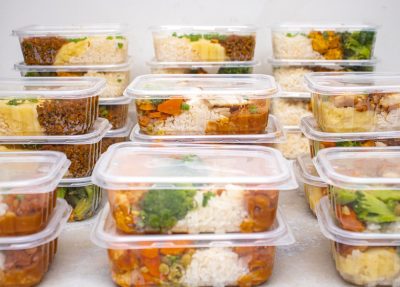
Food Waste Is a Grocery Expense: Make “Eat What We Bought” Part of the Budget
USDA estimates that roughly 30% to 40% of the U.S. food supply is lost or wasted. At the household level, every edible item thrown away is part of the grocery bill that produced no meal. Reducing waste can be more reliable than finding an extra coupon because it protects money you already spent.
Use a simple FIFO system
“First in, first out” means older food stays visible and gets used before newer replacements. Put the new yogurt behind the old one. Keep an “eat first” bin in the refrigerator. Move leftovers to eye level instead of hiding them behind ingredients.
Schedule a leftover night
One dinner each week can be a clean-out-the-fridge meal: leftovers, soup, quesadillas, grain bowls, omelets or sandwiches. This is especially useful the night before the next grocery trip.
Freeze before the food becomes a problem
Do not wait until bread, meat or ripe fruit is on the edge of spoilage. Freeze it while quality is still good and label it so it does not become mystery food.
Buy for your real household
A giant bag of salad is not a bargain for a household that consistently eats only half. Your personal waste history should influence package size just as much as the shelf price.
Meal Prep That Saves Money Without Turning Sunday Into a Full-Time Job
Meal prep can be as simple as doing the high-friction tasks once: cook a pot of rice, roast a tray of vegetables, portion meat, wash fruit, boil eggs, or make a sauce. The goal is to make the food you bought easier to eat than ordering something else.
Cook once, eat three ways
| Base ingredient | Meal 1 | Meal 2 | Meal 3 |
|---|---|---|---|
| Roasted chicken | Chicken + vegetables | Tacos/quesadillas | Soup or pasta |
| Ground meat or lentils | Taco bowls | Pasta sauce | Stuffed potatoes |
| Rice | Side dish | Fried rice | Bean-and-rice bowls |
| Roasted vegetables | Dinner side | Omelet filling | Soup/pasta add-in |
Convenience Food: Pay for It on Purpose
Pre-cut fruit, snack packs, microwave rice, shredded cheese, bottled drinks and prepared entrees are not automatically “bad” purchases. They are expensive when you buy them mindlessly. Sometimes convenience prevents takeout, accommodates a disability, fits a work schedule or reduces waste. Compare the convenience premium with the real alternative—not an imaginary version of yourself who cooks everything from scratch every night.
How Much Should You Stock Up? Use a Consumption Rule
A low price tempts people to buy as much as the store allows. A better rule is to buy enough to reach the next likely sale cycle or the amount you can safely use/store, whichever is smaller. If your household uses one jar of pasta sauce every two weeks, buying 24 jars because they are 40 cents cheaper each ties up money and storage for nearly a year.
Grocery Shopping Habits That Quietly Save Money
- Eat before you shop if hunger makes you impulsive.
- Use a basket for very small trips so the cart does not invite extra items.
- Shop alone when practical if extra shoppers reliably add extras to the cart.
- Keep a running list at home so “quick trips” do not become $30 trips.
- Group errands to reduce transportation cost.
- Do one planned main shop and one small produce/milk refill instead of repeated browsing trips.
- Check the bottom and top shelves; eye-level placement is not a value guarantee.
- Compare endcap displays with the regular aisle. Endcap does not automatically mean sale.
- Watch the register or review the receipt for pricing errors and missed coupons.
- Know the store’s current correction/refund policy before leaving.
Other Places Worth Comparing
Ethnic and international markets
Rice, beans, spices, noodles, produce, herbs and certain cuts of meat can be very competitive at stores serving specific cuisines. Compare quality and unit price rather than assuming either the specialty market or big supermarket wins every category.
Salvage and grocery outlet stores
These stores can have major discounts on closeouts, packaging changes, overstocks and short-dated products. Inspect packaging, understand date labels, and avoid buying unfamiliar food merely because it is cheap.
Farmers markets
Prices vary widely. Go near peak season, compare multiple stands, ask about seconds/imperfect produce where appropriate, and check whether the market participates in SNAP nutrition incentives.
Restaurant-supply and food-service stores
Large basic ingredients can be a strong value for large households, parties or batch cooking, but the package size can be impractical for everyone else.
Store-by-Store Grocery Savings Programs and Tactics (2026)
Programs change frequently, so use this as a map of where to look and verify current terms in the retailer’s app or website before shopping. The best store is not automatically the one with the flashiest loyalty program; compare your final basket cost for the foods you actually buy.
| Store | Savings tools | Best strategy | Official place to check |
|---|---|---|---|
| Walmart | Walmart app, Walmart Cash, eligible manufacturer offers | Use the app to check current prices/offers. Walmart Cash and manufacturer-offer features have specific eligibility/redemption rules. | App · Walmart Cash · Offers |
| Kroger-family stores | Free loyalty account, digital coupons, Fuel Points; optional Boost membership | Clip coupons to the loyalty account, check weekly digital deals and compare fuel-point value with price differences. | Coupons · Boost |
| Target | Target Circle deals, bonuses, digital manufacturer coupons | Activate offers that require activation; check coupon terms because manufacturer coupon combinations can be restricted. | Promotion & coupon help |
| Publix | Club Publix, digital coupons, weekly-ad/BOGO savings | Clip digital coupons to the account and identify yourself at checkout; compare BOGO unit cost with nearby stores. | Digital coupons · Club Publix |
| Safeway | for U loyalty, digital coupons/personalized deals, points/rewards | Load deals before checkout and decide whether grocery, fuel or cash-off style redemptions provide the best value for you. | Safeway for U |
| Albertsons | for U loyalty, personalized deals, digital offers, points/rewards | Use account offers and verify reward choices before they expire. | Albertsons for U |
| Meijer | mPerks coupons/rewards and digital receipts | Clip mPerks offers before checkout and use digital receipts to track repeat prices. | mPerks |
| H-E-B | Digital coupons and weekly savings | Clip eligible digital coupons and compare combo/bundle promotions with buying only the items you need. | H-E-B digital coupons |
| Homeland | Weekly ad, app, digital coupons | Check the local-store weekly ad and load relevant digital coupons before the trip. | Homeland weekly ads |
| Reasor’s | Reasor’s Rewards, paperless coupons, weekly ads/digital deals | Attach coupons/deals to the account and watch local weekly promotions. | Reasor’s · Digital Deals |
| BJ’s Wholesale Club | Digital coupons, Smart Saver, member deals, gas savings | Compare coupon-adjusted unit prices with supermarket sales; membership value depends on what you buy. | BJ’s Deals · Smart Saver |
| Costco | Member pricing; Executive membership has a 2% reward on qualifying purchases | Calculate whether the extra membership tier pays for itself based on qualifying spend; do not count purchases you would not otherwise make. | Executive Rewards |
| Whole Foods Market | Sale signage and Prime-related savings where eligible/current | Build around actual sale items and compare premium/store-brand unit prices. | Ways to Save |
| Wegmans | Shoppers Club and digital coupons | Clip paperless coupons and use the account/list tools for planned trips. | Shoppers Club |
| Food Lion | MVP Card, Shop & Earn, digital coupons, weekly ad | Activate rewards/coupons before shopping and use the MVP account at checkout. | Food Lion Rewards |
| Lidl | Lidl Plus and weekly deals | Check the app/current weekly deals and compare store-brand staples with conventional supermarkets. | Lidl |
| ALDI | Weekly specials/ALDI Finds and low-price private-label model | ALDI U.S. is less centered on traditional coupon stacking; compare its everyday unit prices with sale prices elsewhere and avoid treating every Find as a grocery need. | https://www.aldi.us/ |
Walmart: keep the math simple
Walmart can be useful for everyday-price comparison, pickup and app-based offers. Check Walmart Cash and eligible manufacturer offers, but do not assume an offer applies to every size or can combine with every promotion. For staples, compare Walmart’s unit price against the week’s loss-leader-style supermarket sale rather than assuming either store always wins.
Kroger-family stores: clip before the trip
Kroger’s ecosystem can include digital coupons, weekly digital deals and fuel points. A smart routine is to open the app while building the list, clip only the coupons matching planned purchases, and estimate whether fuel rewards are genuinely valuable to your household. A higher grocery price is not automatically justified by points.
Homeland and Reasor’s: regional programs matter
Regional chains can be very competitive when you use their local ads and account-specific promotions. Homeland promotes weekly ads and digital coupons through its app. Reasor’s highlights Rewards, paperless coupons and weekly/digital deals. Because promotions can be store-specific, set the correct location before comparing.
Warehouse clubs: coupon savings still need a unit-price check
BJ’s prominently offers digital coupons and Smart Saver deals. Costco’s Executive tier advertises a 2% reward on qualifying purchases, subject to its current terms and cap. Those features can be valuable, but the deciding question is still: What will this household pay per usable unit after membership cost, promotions and waste?
SNAP, WIC and Produce Incentives: Use Every Benefit You Are Eligible For
If your household uses SNAP or WIC, treat the benefit rules as part of your grocery planning system. WIC packages vary by participant category and state, so build meals around eligible foods rather than letting benefits expire. For SNAP households, look for participating produce incentive programs such as Double Up Food Bucks, which can increase buying power for eligible fruits and vegetables in participating locations.
- Check your state’s official benefit/app information for current eligible items and balance.
- Plan meals around benefits first, then use cash for gaps.
- Ask whether local farmers markets participate in SNAP and produce-match programs.
- Do not pay a service or social-media account promising to “unlock” benefits; use official channels.
Saving on Groceries for Families: Reduce Choice Overload
Large households can save by reducing unnecessary variety while still giving people choices. Instead of six different snack boxes, choose two core snacks plus fruit. Instead of separate dinner ingredients for every preference, use modular meals such as tacos, baked potatoes, bowls or sandwiches where everyone uses the same base and adds toppings.
Create a household “always okay” list: five breakfasts, five lunches, ten dinners and several snacks everyone will reliably eat. Then rotate sale ingredients through that framework. Predictability reduces emergency purchases and makes stock-up pricing more useful.
Special Diets: Save by Separating “Required” From “Specialty-Branded”
When a medical or dietary requirement makes certain foods necessary, savings often come from naturally compliant foods rather than a cart full of specialty replacements. For example, rice, potatoes, beans, eggs, vegetables, fruit, meat and many basic dairy products can fit some dietary patterns without a specialty label. Always follow your health professional’s guidance for medical diets; the money-saving point is simply to compare the basic-food option with the premium packaged substitute where appropriate.
25 Grocery “Savings” Mistakes That Can Cost More
- Using a coupon because it exists instead of because you need the item.
- Buying the biggest package without checking unit price.
- Buying bulk perishables your household cannot finish.
- Ignoring food already in the freezer.
- Planning seven unrelated dinners with one-off ingredients.
- Assuming every endcap is a sale.
- Assuming every loyalty price beats competitors.
- Counting points as savings before redeeming them.
- Driving across town to save less than the transportation/time cost.
- Adding items to reach a minimum-spend coupon when they were not needed.
- Using delivery without comparing fees, tips and markups.
- Buying pre-portioned convenience foods automatically.
- Buying ingredients for aspirational meals nobody cooks.
- Throwing away food solely because a quality date passed.
- Taking food-safety risks to avoid waste.
- Ignoring checkout errors or missed digital coupons.
- Stocking up without labeling/freezer rotation.
- Buying seasonal clearance just because it is 70% off.
- Letting rebates expire before submission.
- Using a rewards credit card while carrying expensive interest-bearing debt.
- Overbuying snacks because each package is “cheap.”
- Shopping hungry when it predictably increases impulse spending.
- Failing to compare store brand after a name-brand coupon.
- Ignoring the cost of unused warehouse memberships.
- Chasing five stores’ deals every week instead of optimizing the whole basket.
Example: How to Rebuild a $150 Grocery Cart Without Eating “Cheap” Food All Week
Imagine a planned cart totals $150. The goal is not to slash every item to the lowest possible quality. Instead, attack the spending in layers.
| Move | Illustrative change | Why it works |
|---|---|---|
| Shop pantry/freezer | Remove $12 of duplicate staples | Uses food already paid for. |
| Swap two proteins based on weekly ad | Save $8 | Keeps meals similar while buying the stronger sale. |
| Compare unit price/store brand | Save $7 across cereal, canned goods and dairy | Small repeat savings across many items. |
| Clip relevant digital offers | Save $6 | Discounts things already on the list. |
| Use a legitimate rebate | Get $3 back | Post-purchase savings without changing the plan. |
| Replace two convenience packs with basic versions | Save $5 | Pays yourself for a small amount of prep. |
| Skip a backup produce item likely to spoil | Save $4 | Reduces waste risk. |
That illustrative $150 cart becomes $108 out of pocket before counting any $3 rebate, without requiring extreme couponing. Your numbers will differ, but the pattern matters: inventory + flexible meals + unit-price swaps + targeted offers + waste control.
Coupon and Rewards Stacking: Real-World Math Examples
“Stacking” sounds complicated, but the math should always be simple enough to explain on one line. Start with the store price, subtract only discounts that the current terms allow, then compare the final out-of-pocket cost and any confirmed post-purchase reward with the cheapest acceptable alternative. Never count an unearned rebate twice or treat points as cash until you know their redemption value.
| Scenario | Bad way to think about it | Better calculation |
|---|---|---|
| Name-brand pasta sauce is $4.49; store brand is $2.29; name brand has a $1 coupon | “I saved $1.” | Name brand is still $3.49, so store brand is $1.20 cheaper unless you value the brand difference. |
| Cereal is on sale for $3.50 and an eligible $1 digital offer applies | “It is 50% off regular price.” | Final price is $2.50. Divide by ounces and compare with other cereal sizes/brands. |
| Spend $25, get $5 reward | “Everything is 20% off.” | Only count the $5 if you were already near $25 with needed items and know how/when the reward can be redeemed. |
| Buy 2, get 1 free | “Free item means best deal.” | Total price ÷ total ounces/count tells the real unit price. Compare with a single larger store-brand package. |
| Cashback app advertises $2 back | “This item costs $2 less.” | Pay the shelf price first. Count the $2 only after confirming eligibility and successful credit. |
The safest order of operations
- Choose the item based on need and base value.
- Apply member/store pricing.
- Apply eligible coupons according to the retailer’s current rules.
- Pay and keep the receipt.
- Submit eligible post-purchase rebates.
- Record points/rewards separately until you redeem them.
- Compare your true final cost with the alternative you would have purchased.
Learn Sale Cycles Without Memorizing a Giant Calendar
Most shoppers do not need a national spreadsheet predicting every cereal or detergent sale. You need to recognize the cycle at the stores you actually use. Over eight to twelve weeks, write down the best price you see on your top repeat items. You will quickly learn which products rotate through promotions often enough that paying full price is usually avoidable.
- When a shelf-stable staple hits your normal “good” price, buy enough to bridge to the next likely sale—not six months by default.
- When a perishable goes on sale, increase quantity only if meals or freezer space are already planned.
- If an item has not been on sale for months, compare a store-brand substitute instead of waiting forever.
- Holiday-related foods often have temporary promotional windows; stock only products your household normally uses.
- Track final price, not percentage off, because regular/reference prices can change.
BOGO, Buy-2-Get-1 and Multi-Buy Deals: Do the Math Before You Celebrate
Multi-buy signs are designed to make the promotion feel obvious, but the best choice depends on local rules and the unit price. Some stores require the stated quantity; others price each item proportionally. Some BOGO markets let you buy one for half price; others require both. Treat the sign as an invitation to calculate, not as proof of value.
- Do not buy a second perishable just to satisfy a promotion unless you can use or freeze it.
- Check whether the free/discounted item must be equal or lower value.
- Watch quantity limits and loyalty-card requirements.
- For “10 for $10” style offers, verify whether you must buy ten.
- On mix-and-match events, choose items based on household use rather than maximizing the sticker value of the “free” item.
Shrinkflation Defense: Re-Check Familiar Packages
A product can keep a similar shelf price while quietly containing fewer ounces or fewer individual pieces. That is why price memory alone is not enough. If you remember “this coffee is usually $9.99” but the canister changed from 30 ounces to 25 ounces, the old benchmark is no longer valid. Unit price normalizes those package changes.
- Record package size in your price book for expensive repeat items.
- Compare ounces/count on “new look” packaging.
- Be skeptical of “family size” or “value size” language unless the unit price proves it.
- Compare concentrate vs. ready-to-use products on the amount of finished product they make.
- For paper goods, compare standardized sheet/area counts when available—not only number of rolls.
The In-Aisle Playbook: What to Do When the Store Changes Your Plan
Real grocery trips rarely match the list perfectly. An advertised item is out of stock, the produce looks poor, or a different size is unexpectedly marked down. Use a decision tree instead of improvising emotionally.
- Need the item? If no, skip it instead of hunting for a replacement.
- Is there an acceptable substitute? Compare unit prices among store brand, another size and another form (fresh/frozen/canned).
- Is the sale item out of stock? Check the current rain-check/substitution policy if the retailer offers one.
- Did you find an unplanned clearance deal? Ask whether it replaces a future purchase or creates a new purchase.
- Will it be used before it spoils? If uncertain, leave the deal for someone else.
Category-by-Category Grocery Savings Playbook
Bread and tortillas
Compare store bakery, packaged and store-brand options. Freeze extra bread in meal-sized portions when a good sale appears. Tortillas can be a flexible base for wraps, quesadillas, breakfast and leftover makeovers.
Cereal and breakfast
Breakfast cereal is highly promotional at many chains, so compare sale + digital offer with oatmeal, eggs and store-brand cereal. Cost per serving matters more than the size of the coupon.
Coffee and tea
Coffee has large package and format differences. Compare ground coffee, whole bean, pods and ready-to-drink by actual servings. Pods can carry a significant convenience premium, though they may reduce wasted brewed coffee for some households.
Soda, juice and bottled drinks
Beverages can quietly consume a large part of the bill. Track them as their own category. Multi-buy promotions are common; calculate cost per ounce and avoid buying volume you would not otherwise drink.
Snacks
Choose a few household favorites instead of trying to maintain a convenience-store selection at home. Compare family-size bags with individually portioned packs and portion at home when practical.
Spices and seasonings
Compare unit prices at supermarket store brands, international markets and bulk spice sections where available. Do not buy huge jars of spices that lose quality before you use them.
Baking supplies
Flour, sugar, butter, chocolate and baking products can become more promotional around major baking holidays. If you bake regularly and have safe storage, those are logical stock-up windows.
Canned goods
Store brands are often competitive. Check sodium, ingredients and drained weight where relevant. Multi-buy deals need the same unit-price test as every other promotion.
Condiments and sauces
Before buying another bottle, check the refrigerator door. Condiments are common duplicate purchases. Build meals around open jars before opening replacements.
Prepared deli food
Compare cost per pound with raw ingredients and with takeout. Prepared chicken or deli meals can still be economical when they replace restaurant spending—especially if leftovers become a second meal.
Organic products
If organic matters to you, compare store-brand organic lines, frozen options, seasonal produce and promotions. Apply the same unit-price and waste rules; do not assume specialty branding is the only compliant choice.
Household products sold at grocery stores
Keep cleaners, paper goods and toiletries in a separate price book. A grocery store may be convenient but not always cheapest. Compare drugstores, mass retailers and warehouse clubs when quantities are practical.
A Freezer System That Turns Sales Into Actual Savings
A freezer is only a savings tool when you can find what is inside it. Otherwise it becomes a cold place where bargains disappear for a year. Use a low-tech system: date labels, meal-size portions, oldest items in front, and a short inventory on the door.
| Freezer habit | Why it saves money |
|---|---|
| Freeze in meal-sized portions | You thaw only what you need. |
| Flatten bags when practical | They freeze/thaw faster and stack better. |
| Label item + date | Reduces mystery-food waste. |
| Keep an inventory | Prevents buying duplicates. |
| Plan one freezer meal weekly | Creates steady turnover. |
| Cool and package food properly | Protects quality and safety. |
For exact storage times and safe thawing/cooling, use current USDA/FDA food-safety guidance rather than relying on a money-saving blog rule. Savings never justify unsafe storage.
The “We Need a Cheap Grocery Week” Rescue Plan
Sometimes the goal is not long-term optimization; it is getting through one expensive month without relying on takeout. Start by inventorying every protein, starch, vegetable and breakfast item at home, then buy only the ingredients that turn those pieces into complete meals.
- Choose the freezer/pantry foods that need to be used.
- Pick low-cost meal bases such as rice, potatoes, pasta, oats, tortillas or beans that fit your household.
- Buy one or two sale proteins rather than a different meat for every dinner.
- Use frozen or canned produce to fill gaps where fresh prices are high or spoilage risk is high.
- Plan leftovers for lunches.
- Pause stockpiling—even good deals—unless the price is extraordinary and the item prevents a near-term full-price purchase.
- Set aside a tiny amount for one treat so the plan feels livable.
| Low-cost meal framework | Examples |
|---|---|
| Rice/grain bowl | Rice + beans/egg/chicken + vegetables + sauce |
| Pasta night | Pasta + tomato sauce + vegetables + small amount of meat/cheese |
| Soup night | Broth/base + beans/meat + vegetables + starch |
| Breakfast dinner | Eggs + toast/potatoes + fruit |
| Taco/wrap night | Tortillas + beans/meat + vegetables + toppings |
| Baked potato bar | Potatoes + leftover chili/beans/broccoli/cheese |
| Leftover remix | Fried rice, quesadillas, omelet, soup or casserole |
Do Not Spend Two Hours to Save $3: Put a Value on Your Time
Extreme couponing can become a hobby, but a household budget does not require it. Track savings per minute for a few weeks. If clipping and submitting offers takes 25 minutes to save $2, while a five-minute pantry check reliably prevents a $10 duplicate purchase, the pantry check deserves priority.
- Automate repeatable work: keep loyalty accounts signed in and a standard list on your phone.
- Use one or two rebate apps well instead of six poorly.
- Do not visit an extra store for one tiny discount unless it is already on your route.
- Focus first on high-dollar categories: meat, drinks, snacks, convenience food and waste.
- If couponing is fun for you, that enjoyment has value—but separate hobby time from necessary budget work.
Seasonal Grocery and Holiday Clearance: Buy Future Food, Not Future Clutter
After major holidays, stores may reduce seasonal candy, baking supplies, themed snacks, grilling products or gift-pack food. Some items are simply regular food wearing holiday packaging; others are novelty products you would never buy at full price. The first category can be a smart stock-up if shelf life and price are good. The second is still spending.
- Check expiration/best-quality dates before buying a large clearance quantity.
- Compare clearance unit price with the normal store-brand equivalent.
- Holiday packaging does not matter for pantry ingredients, but seasonal flavors may be hard to use later.
- Freeze eligible items when appropriate.
- Do not let 75% off turn into 100% wasted.
School Lunches and Kids’ Snacks Without the Individual-Pack Tax
Single-serve packages are convenient but can be expensive per ounce. For lunches, compare the cost of a large bag plus reusable portions with individually packaged versions. Then be realistic: if reusable containers routinely get lost or nobody has time to portion food, the convenience package may still be worth part of the premium.
- Rotate two or three snack choices instead of buying every preference weekly.
- Use leftovers in thermoses or cold lunch formats when practical.
- Freeze sandwiches or baked goods that freeze well to reduce morning stress.
- Compare juice boxes, bottled drinks and refillable water on cost per serving.
- Use school-meal benefits if eligible; compare the real school meal cost with packed-lunch cost, including wasted packed food.
How to Compare Two Grocery Stores Without Pricing 100 Items
To decide where to do most of your shopping, create a “personal basket” of 15 to 25 products you buy constantly. Price that exact basket at two or three nearby stores on the same week. Include loyalty prices you can realistically access, but do not include one-time coupons that will not repeat.
- Pick repeat products across protein, dairy, produce, pantry and household basics.
- Standardize the unit/size so comparisons are fair.
- Record regular or typical price, not only the week’s best outlier.
- Add the total basket.
- Estimate fuel/time difference and loyalty rewards you actually redeem.
- Repeat once during a different sale week.
This tells you much more than a national “cheapest grocery store” ranking because your household’s basket may be completely different from the average shopper’s.
Advanced Grocery Savings for People Who Already Do the Basics
- Use a separate “stock-up” envelope/budget so a great sale does not blow up the weekly meal budget.
- Photograph or save screenshots of exceptional prices to improve your price book.
- Track the top five items whose prices change your basket total most.
- Compare equivalent recipes by cost per serving—chili vs. burgers, sheet-pan chicken vs. deli meals, homemade pizza vs. delivery.
- Use loyalty purchase history to find products you buy repeatedly at full price, then target those categories for substitutions or sale-cycle buying.
- When a store has a threshold promotion, calculate how much of the threshold is made of items you would buy within the next two weeks anyway.
- Keep one emergency freezer meal so an exhausting day does not automatically become restaurant spending.
- Audit memberships and delivery subscriptions every 6–12 months based on actual usage, not expected usage.
- If a favorite product is discontinued or reformulated, use it as a chance to re-test store brands instead of automatically moving to the closest premium replacement.
- Measure savings as monthly grocery spend per household need—not as the sum of every coupon’s face value.
The 30-Day Grocery Bill Reset
Week 1: Measure
- Save every grocery receipt.
- Write down food thrown away.
- Create your 20-item price book.
- Separate groceries from household items.
Week 2: Plan
- Shop pantry/freezer before the weekly ad.
- Choose 3 anchor dinners.
- Make one main list and set a dollar cap.
- Clip only list-matching digital coupons.
Week 3: Optimize
- Compare unit prices on your 10 most expensive repeat items.
- Try one store-brand swap.
- Learn your store’s markdown pattern.
- Use one rebate app only if it matches planned items.
Week 4: Lock in
- Calculate the month’s average weekly spend.
- Identify the three changes that saved the most.
- Drop any tactic that took too much time for too little return.
- Set next month’s target slightly below your old baseline if sustainable.
The 10-Minute Pre-Grocery Checklist
- Check refrigerator, freezer and pantry.
- Pick meals around what needs to be used first.
- Open the weekly ad and choose only useful standout deals.
- Check your price book for stock-up items.
- Clip relevant digital coupons/loyalty offers.
- Check one cashback app for list matches.
- Write a list grouped by department.
- Set a cart target and small flex amount.
- Bring reusable bags/cooler if useful for the trip.
- At checkout, use the loyalty account and verify discounts.
Frequently Asked Questions About Saving Money on Groceries
What is the best way to save money on groceries?
The strongest all-around method is to combine pantry/freezer inventory, flexible meal planning, weekly-ad shopping, unit-price comparison, store loyalty offers and food-waste prevention. Coupons help, but they work best as one layer of the system.
Are digital coupons better than paper coupons?
Digital coupons are often easier to find and attach to a loyalty account, but “better” depends on the store and the exact offer. Read current coupon terms, especially around manufacturer-offer stacking and limits.
Is Walmart always cheaper for groceries?
No store is always cheapest on every basket. Walmart can be strong on everyday prices, while supermarkets may beat those prices on weekly-ad loss leaders or loyalty promotions. Compare the foods you actually buy.
Is ALDI always the cheapest grocery store?
ALDI can be very competitive on private-label staples and produce, but weekly sales at other stores can win individual categories. Basket comparison is more useful than declaring one chain universally cheapest.
Should I shop at multiple grocery stores to save money?
Sometimes, but only when the savings exceed the extra time, transportation and temptation. Many households do better with one primary store plus a second store for a few predictable categories.
How do I know whether a grocery sale is good?
Compare the final unit price with your recent price book, another size/brand, and nearby alternatives. Ignore the size of the “percent off” badge if the final price is still ordinary.
When do grocery stores mark down meat?
There is no universal national time. Ask your local meat department, observe sticker patterns on several visits, and plan to cook or freeze short-dated meat promptly.
Can I use a digital coupon and a cashback app together?
Sometimes, but not always. Retailer and rebate-app terms vary by offer. Check whether the rebate excludes purchases where another coupon or discount was used.
Are warehouse clubs worth it for groceries?
They can be for households that consistently use enough qualifying items to recover membership cost without increasing waste. Calculate break-even savings based on what you already buy.
Does buying in bulk always save money?
No. Unit price can be higher, promotions may favor smaller sizes, and spoilage can erase any savings. Compare unit price and realistic consumption.
How can I save money on groceries without coupons?
Use meal planning, store brands, unit pricing, flexible proteins, seasonal produce, frozen/canned alternatives, markdowns, batch cooking, a price book and food-waste reduction.
How can I spend less on meat?
Buy based on price per pound, use flexible cuts, stretch meat in mixed dishes, use lower-cost proteins for some meals, and freeze strong sale or markdown purchases in portions.
Is grocery pickup cheaper than shopping in store?
It can reduce impulse purchases, but item pricing, fees and minimums vary. Compare the final pickup total with what you would realistically spend in store.
What groceries should I always keep on hand?
Choose staples that match your household: rice, pasta, beans, canned tomatoes, oats, eggs, frozen vegetables and basic baking/seasoning ingredients are flexible examples, but a pantry is only valuable when the food gets used.
How much food should I stockpile?
Usually enough to cover your expected use until the next likely strong sale, limited by storage space, cash flow and shelf/freezer life. More is not automatically better.
Can reducing food waste really lower my grocery bill?
Yes. Food discarded at home is money already spent without producing a meal. Track what you throw away for two weeks and adjust quantities, storage and meal planning around the biggest repeat waste.
What is unit price?
Unit price is the cost for a standard quantity such as an ounce, pound or count. It lets you compare packages of different sizes more fairly.
Should I use a grocery rewards credit card?
Only if it fits your broader finances. Rewards are not savings if interest, fees or overspending exceed the reward. Pay attention to card terms and your ability to pay balances responsibly.
How do I save on groceries with SNAP?
Plan around eligible foods, use all benefits you are entitled to, and check for participating produce-incentive programs such as Double Up Food Bucks where available. Program availability varies by state/location.
What should I do if a digital coupon does not come off?
Before leaving, verify the product/size/quantity and loyalty account, then ask customer service about the store’s current correction procedure. Save the receipt and screenshots of the offer when practical.
Authoritative Sources and Store Program Pages
Store promotions and loyalty rules change. These are the official/authoritative pages used to verify the major programs and consumer guidance in this guide. Check the current retailer page or app before relying on a specific offer.
- USDA Food Plans and monthly cost reports
- USDA Food Waste FAQs and FDA consumer food-waste/safety guidance
- NIST unit pricing guidance
- Double Up Food Bucks
- Walmart app, Walmart Cash and manufacturer offers
- Kroger digital coupons and Boost
- Target promotion/coupon help
- Publix digital coupons and Club Publix
- Safeway for U and Albertsons for U
- Meijer mPerks, H-E-B digital coupons, Homeland weekly ads, and Reasor’s
- BJ’s Deals, Costco Executive Rewards, Whole Foods ways to save, Wegmans Shoppers Club, Food Lion Rewards, and Lidl
- Ibotta and Fetch